



UNESCO’s World Heritage Committee added 25 sites to the list at its session in Busan in July. Three of them are the first any of their countries have ever had.
Comoros, São Tomé and Príncipe and South Sudan now appear on a list that, until this year, had no entry from them at all — while Italy alone holds around sixty.
What was decided
The 48th session of the World Heritage Committee ran from 19 to 29 July 2026 in Busan, Republic of Korea. It:
- Inscribed 25 new sites — 19 cultural, 5 natural, 1 mixed — plus two extensions to existing sites.
- Brought the total World Heritage List to 1,273 sites.
- Reduced the number of countries with no listed site from 26 to 23.
- Added six sites to the List of World Heritage in Danger, and removed the Historic Centre of Vienna from it.
- Adopted a World Heritage Strategy for Small Island Developing States (2026–2034), backed by a $13 million budget.
The session was presided over by UNESCO Director-General Khaled El-Enany, an Egyptologist and former Egyptian antiquities minister who succeeded Audrey Azoulay in 2025.
The new entries worth knowing about
Ancient Buddhist Site of Sarnath (India). Where the Buddha is held to have delivered his first sermon after enlightenment — among the four principal Buddhist pilgrimage sites, near Varanasi.
Beaches of the D-Day Landings, Normandy 1944 (France). A twentieth-century military landscape rather than an ancient monument, and part of a gradual widening of what “heritage” is taken to mean.
Aalto Works (Finland). The architecture of Alvar Aalto — modernist, and recent enough that some of it is still in use as designed.
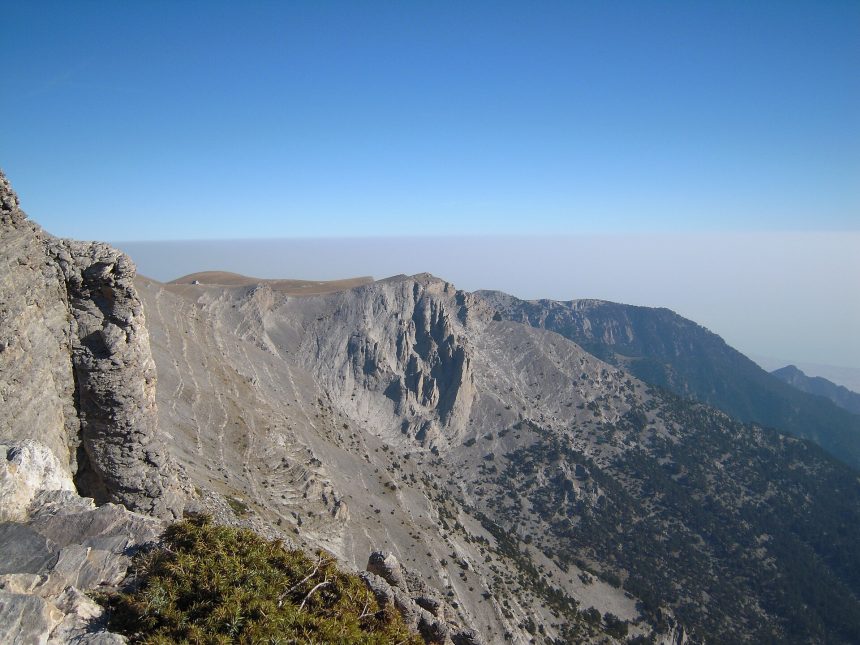
Mount Olympus (Greece). Listed as a mixed site, recognised for both natural and cultural value: an ecosystem and the home of the Greek pantheon in one designation.
Boma-Badingilo Migratory Landscape (South Sudan). The country’s first World Heritage site, protecting one of the largest land mammal migrations on Earth — and doing so in a country still recovering from civil war.
The imbalance the list has always had
The World Heritage List has been criticised for decades for reflecting where the Convention’s machinery works well rather than where the world’s heritage is.
Nomination is not simple. A state party must prepare an extensive dossier demonstrating “outstanding universal value,” document a management plan, prove legal protection, and shepherd it through advisory-body evaluation. That takes specialist staff, money and years of institutional continuity.
Countries with well-funded heritage ministries and long experience of the process do well. Countries without them do not — regardless of what stands on their territory.
El-Enany, whose own background is in antiquities administration, stated the aim directly: the list “must become more inclusive and better reflect the diversity of our world.” He also framed the purpose more broadly: “Heritage is a force for cohesion and empowerment.”
Three first-time inscriptions in one session is a real shift. Twenty-three countries still have none.
The danger list, and what it signals
Six sites were added to the List of World Heritage in Danger, including Tyre in Lebanon and the Ancient City of Tauric Chersonese in Ukraine.
That list is often reported as a shaming mechanism. It is better understood as a trigger: it unlocks access to the World Heritage Fund and obliges the international community to develop a corrective programme with the state party.
Its limits are obvious. Listing does not stop a war. Both additions this year sit in or near active conflict, and no designation protects stone from ordnance.
The removal of Vienna’s historic centre is the other half of the story, and the more encouraging one. Sites do come off the danger list when the threat — in Vienna’s case, a long dispute over high-rise development affecting the historic skyline — is resolved. The mechanism works when the threat is a planning decision. It does not when the threat is artillery.
What listing does to a place
For anyone planning to visit the new entries, there is a pattern worth understanding, because it cuts both ways.
Inscription reliably raises a site’s profile, and visitor numbers usually follow. That brings revenue for conservation and for the surrounding economy, and it brings the attention that makes destruction politically costly.
It also brings the crowds. Several long-listed sites have spent the past decade introducing visitor caps, timed entry and tourist taxes to manage numbers that arrived partly because of the designation. Listing is a conservation instrument that generates its own conservation problem.
For a newly inscribed site in a country with limited tourism infrastructure, that pressure arrives before the capacity to handle it does. The $13 million small-island strategy is, in part, an acknowledgement that recognition without management support can damage what it recognises.
If you are planning to go
Practical points, stated plainly:
- Inscription does not create infrastructure. A newly listed site may have the same access roads, the same accommodation and the same visitor facilities it had in June. Go expecting what is there, not what the designation implies.
- Check travel advisories. Some of this year’s entries are in or adjacent to conflict-affected areas. South Sudan and Lebanon both require checking your government’s current advice before booking, not after.
- Newly listed is not newly ready. The gap between designation and visitor management is typically several years, and going in the first season can mean unmanaged crowds at an unprepared site.
Why the Convention still matters
The 1972 World Heritage Convention has more than 190 states parties, making it one of the most widely ratified international instruments of any kind.
Its practical force is modest — UNESCO cannot compel a government to do anything — but it creates a shared international register of what is worth keeping, and a procedure for objecting when a state party proposes to damage something on it. In a period when multilateral institutions are under strain, an agreement that nearly every country has signed and continues to participate in is not a trivial thing.
The geographic imbalance is a real criticism. That it is being addressed slowly, by adding countries rather than by removing anyone, is roughly the pace such institutions move.
What to watch
- Visitor numbers at the three first-time countries over the next two or three seasons — the test of whether inscription helps or overwhelms.
- The danger-list additions, and whether the corrective programmes achieve anything where conflict is the threat.
- Nominations from the remaining 23 countries with no listed site, and whether UNESCO’s capacity-building support changes their success rate.
- The next Committee session, whose location and date had not been confirmed in the sources available.
What “outstanding universal value” has to mean
The Convention’s central test sounds vague and is in fact quite specific, which is why nominations take years.
A site must demonstrate outstanding universal value against at least one of ten criteria — six cultural, four natural. They include representing a masterpiece of human creative genius; bearing unique testimony to a cultural tradition or a civilisation that has disappeared; being an outstanding example of a type of building or landscape illustrating a significant stage in human history; containing superlative natural phenomena; and holding the most important natural habitats for biodiversity conservation.
Meeting a criterion is necessary but not sufficient. A site must also satisfy conditions of integrity — that it is whole enough to convey its significance — and, for cultural sites, authenticity. And it must have adequate legal protection and a functioning management plan.
That last requirement is where many nominations from under-resourced countries fail. A management plan is a document describing how the site will be conserved, who is responsible, how visitors will be handled and how it will be funded. Producing one that satisfies the advisory bodies requires expertise and money that are unevenly distributed — which is a substantial part of why the list looks the way it does.
Where the imbalance came from
The concentration of listings in Europe has a history, and it is not primarily about where remarkable things are.
The Convention was drafted in 1972, in a period when the dominant idea of heritage was monumental, architectural and material: buildings, ruins, cathedrals, archaeological sites. That conception maps well onto European and Mediterranean traditions of stone construction.
It maps less well onto heritage that is landscape-based, oral, ceremonial, or built in materials that do not survive centuries. A tradition whose most significant expressions are performed rather than constructed had no obvious route onto a list of places.
UNESCO has responded in two ways. The Global Strategy, adopted in 1994, explicitly aimed at a more representative list and broadened the categories to include cultural landscapes — places where human activity and natural environment are inseparable. And a separate instrument, the 2003 Convention on Intangible Cultural Heritage, was created to recognise practices, performances and craft knowledge that the 1972 Convention structurally could not.
Boma-Badingilo, listed as a migratory landscape, is a product of that widening. It would have been difficult to nominate under the 1972 conception of what a heritage site is.
The overtourism problem UNESCO created
The relationship between listing and visitor numbers is well documented and increasingly awkward for the institution.
Inscription functions as a globally recognised quality mark. It appears in guidebooks, in tour operator marketing and in travel algorithms. Visitor numbers at newly listed sites frequently rise substantially, and the increase persists.
Where management capacity exists, that is a benefit: revenue funds conservation and the local economy gains. Where it does not, the result is physical wear, disrupted local life, and the displacement of residents by tourism-oriented commerce.
The responses now in use across long-listed sites — visitor caps, timed entry, tourist levies, restrictions on short-term rentals, and in extreme cases closing sections entirely — are all reactive. They arrive after the pressure has done damage.
The $13 million small-island strategy is an acknowledgement of the problem’s shape: places with the least capacity to manage visitors are the ones for whom listing changes the most. Whether the sum is proportionate to the risk is a fair question.
What listing does when it works
Against that, the mechanism has real successes, and they are worth stating because the criticism is easier to make than the defence.
Inscription creates an international constituency for a place. When a government proposes a development that would damage a listed site, the objection is no longer only domestic — there is a formal process, an international body that will comment, and a reputational cost. Several major infrastructure projects have been redesigned or abandoned under exactly that pressure.
The danger list adds a further step: it triggers technical assistance and access to the World Heritage Fund, and it converts a slow deterioration into a documented international concern with a corrective programme attached.
Vienna’s removal from that list this year is the demonstration case. A long dispute over development affecting the historic skyline was resolved, and the site came off. The mechanism worked because the threat was a planning decision and there was a government able to change it.
Tyre and Chersonese illustrate the limit of the same mechanism. No designation stops a war.
Sources
- UNESCO, “UNESCO World Heritage: 25 new sites inscribed,” July 2026 — unesco.org
- UNESCO, “UNESCO’s World Heritage Committee concludes with renewed global commitments,” July 2026 — unesco.org
- UNESCO, World Heritage Committee 2026 session hub — unesco.org
- Forbes, “UNESCO Just Added 25 New World Heritage Sites — Here’s Where To Go,” 9 August 2026 — forbes.com