



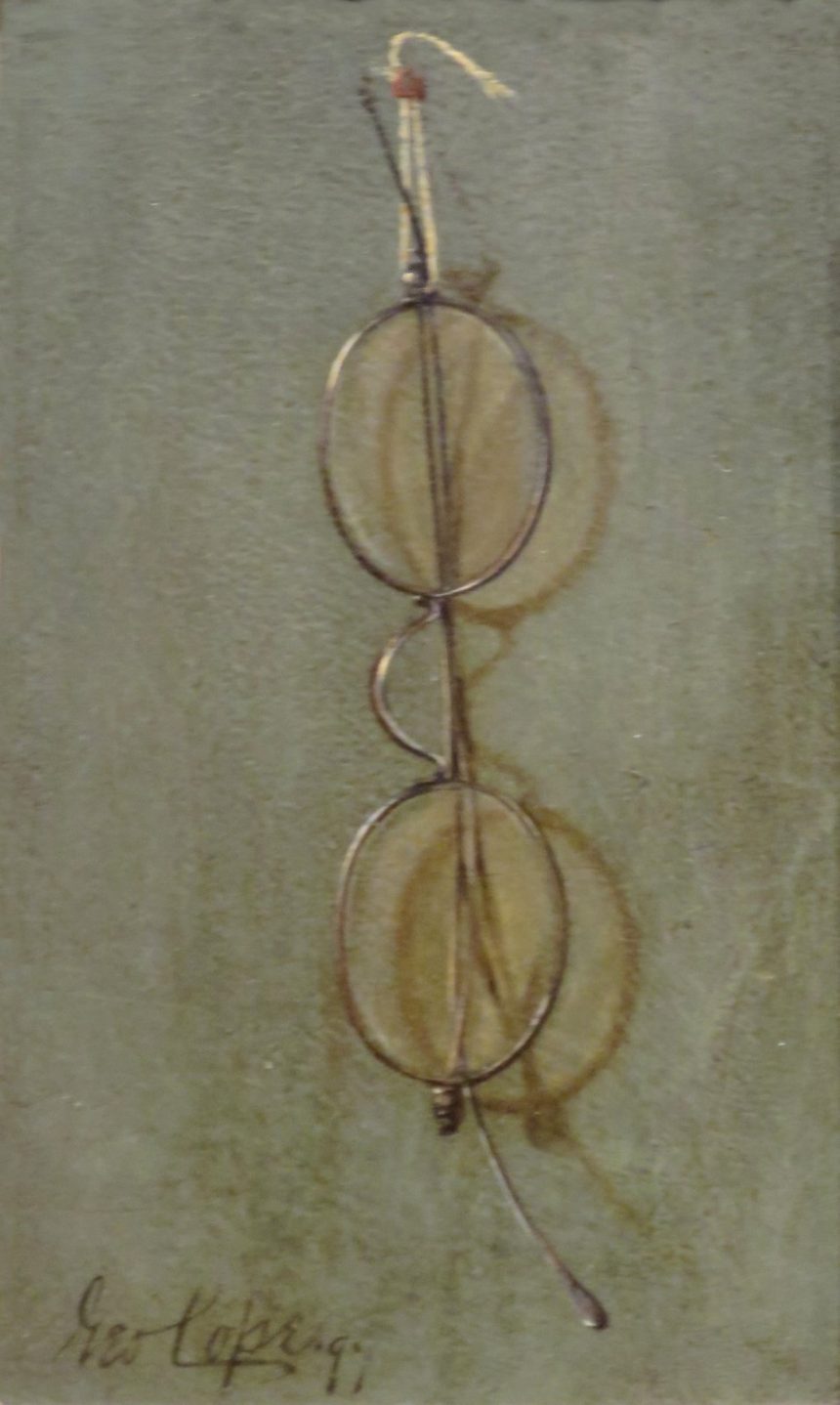
Uncorrected refractive error is the leading cause of vision impairment in the world. The technology to fix it was invented in the thirteenth century.
The World Health Organization estimates the annual global productivity loss from vision impairment at roughly US$411 billion, and the cost of closing the unmet need at about US$25 billion.
On 28 August, WHO published guidance arguing that what stands between those two numbers is not medicine or manufacturing. It is law, tariffs and workforce policy — things governments control directly.
The scale
WHO’s standing global estimates:
- At least 2.2 billion people live with near or distance vision impairment.
- Roughly 1 billion of those cases were preventable or remain unaddressed.
- 88.4 million have distance vision impairment specifically from uncorrected refractive error — short-sightedness, long-sightedness, astigmatism.
- 826 million have near-vision impairment from uncorrected presbyopia, the age-related loss of close focus that begins for most people in their forties.
In low-income countries, two in three people who need glasses do not have them. In the WHO African region, roughly 70 per cent of people with refractive errors lack access.
Presbyopia is the quietest item on that list and the largest. It is not a disease. It happens to essentially everyone who lives long enough, and it is corrected by reading glasses that cost very little to manufacture. That 826 million people live with it uncorrected is a distribution failure, not a medical one.
What the guidance actually says
“Policy considerations to improve access to refractive error care” (ISBN 978-92-4-012395-3, 46 pages) is part of WHO’s SPECS 2030 initiative and is addressed to policymakers, lawmakers and regulators rather than clinicians.
It identifies five areas:
- Service accessibility — integrating vision screening and spectacle dispensing into health services people already use, rather than requiring a separate specialist visit.
- Workforce capacity — competency-based training, so that dispensing basic corrective lenses does not require the scarcest and most expensive category of eye-care professional.
- Public awareness — particularly of myopia risk factors, which matters as myopia prevalence rises worldwide.
- Cost — tax and tariff reform on spectacles and lenses.
- Quality standards and data systems — so that what is dispensed works and what is achieved can be measured.
Dr Stuart Keel, a WHO Technical Officer, put the underlying case simply: “Eyeglasses are among the most cost-effective tools in global health.”
The tariff point deserves attention
Of the five, the least discussed is the most immediately actionable.
Spectacles and lenses are, in many countries, treated as consumer goods for customs and tax purposes. They attract import duties and value-added tax. A product that costs a few dollars to make can arrive at retail carrying a substantial share of tax on top of shipping and margin — in economies where a few dollars is a meaningful sum.
Removing a tariff requires no clinical trial, no new technology, no trained workforce and no donor programme. It requires a finance ministry to reclassify a category.
WHO does not quantify how many countries currently impose such barriers, which is a gap in the document. But the mechanism is straightforward, and it is unusual in global health for a lever this simple to be available.
Why the workforce point matters more than it sounds
In many countries, dispensing corrective lenses is legally restricted to optometrists or ophthalmologists. Where those professionals are scarce and concentrated in cities, the legal requirement becomes the binding constraint on access, regardless of how many glasses exist.
Refracting a patient for basic distance or reading correction is a learnable skill. It does not require the full training of an ophthalmologist, and task-sharing models — training community health workers to screen and dispense within defined limits, referring complex cases upward — have been used successfully elsewhere in health systems.
What blocks this is usually scope-of-practice regulation. That is a legislative question, not a clinical one, which is why the guidance is addressed to lawmakers.
The world is off track
A WHO-commissioned analysis drawing on data from more than 815,000 people across 76 countries, led by Professor Rupert Bourne of the Vision Loss Expert Group, assessed progress toward the SPECS 2030 target of a 40 per cent increase in effective spectacle coverage by 2030.
Bourne’s summary: “We are off track.”
“Effective coverage” is a stricter measure than it appears. It counts people whose vision is actually corrected to a functional standard — not people who received glasses, and not people who own a pair that no longer matches their prescription.
What uncorrected vision costs
The $411 billion figure is a productivity estimate, and it is worth understanding what sits inside it.
A farmer who cannot see clearly at distance works less safely and less productively. A tailor or mechanic who cannot focus at arm’s length loses their trade at forty-five, decades before they would otherwise stop working. A child who cannot read the board is recorded as struggling academically when the problem is optical — a misdiagnosis that follows them through school and into what they are able to do afterwards.
That last one is the reason school-based screening recurs in every serious proposal on this subject. It catches the problem at the point where the cost of missing it compounds for the longest.
What this document is and is not
In fairness to readers, the limits should be stated.
This is policy guidance and advocacy, not new research. It contains no new epidemiological data of its own, drawing instead on WHO’s existing fact-sheet figures — last updated 10 February 2026 and derived from burden-of-disease modelling rather than a fresh 2026 survey — and on the separately published Vision Loss Expert Group analysis.
The 2.2 billion and related figures should therefore be read as WHO’s standing global estimate, not a number newly generated in August 2026.
Nor does guidance make anything happen. WHO cannot change a national tariff schedule or a scope-of-practice law. What a document like this does is give health ministries a citable international reference when arguing with finance ministries and professional bodies. That is a real function, and a modest one.
What to watch
- Country-level adoption. Whether any government actually removes duties on spectacles or widens who may dispense them.
- Effective coverage data ahead of 2030 — the only measure that tests whether any of this worked.
- Myopia prevalence, which is rising in many countries, particularly in East Asia, and which enlarges the problem faster than the response is scaling.
What refractive error actually is
The condition behind the largest treatable cause of vision impairment is purely geometric, which is why the fix is a piece of shaped glass.
The eye focuses light onto the retina. When the eyeball’s length and the focusing power of the cornea and lens are mismatched, the focal point falls in front of or behind the retina, and the image is blurred.
- Myopia — the eye is too long relative to its optics; distant objects blur.
- Hyperopia — the eye is too short; near objects blur, and eventually distant ones too.
- Astigmatism — the cornea is unevenly curved, blurring at all distances.
- Presbyopia — the lens stiffens with age and can no longer change shape enough to focus close. This one happens to essentially everyone from around the mid-forties.
None involves disease of the eye. The tissue is healthy; the geometry is wrong. A lens of the correct power moves the focal point onto the retina and the problem is solved completely, immediately, for as long as the glasses are worn.
This is what makes the numbers so uncomfortable. This is not a condition awaiting a scientific breakthrough. The remedy has existed for seven centuries.
Why the myopia numbers are rising
The problem is growing, and the driver is unusual for a global health trend.
Myopia prevalence has increased sharply over recent decades, most dramatically in parts of East and Southeast Asia, where rates among young adults in some urban populations are very high.
Genetics contributes, but the timescale rules it out as the main cause — gene pools do not change in two generations. The evidence increasingly points to childhood environment, and specifically to time spent outdoors. Studies have found that children who spend more hours in daylight develop myopia at lower rates, with the leading hypothesis being that bright light influences the signalling that regulates eye growth during development.
Intensive close work and heavy schooling are associated too, though disentangling that from reduced outdoor time is difficult, since they trade off against each other.
The implication is a public health lever that has nothing to do with clinics: school schedules and outdoor play. That is one reason WHO’s guidance includes public awareness of myopia risk factors as a distinct focus area rather than folding it into service delivery.
How glasses could be delivered at scale
The delivery models are known and have been demonstrated. What is missing is the regulatory permission for them.
School screening. Testing children with a chart takes minutes and requires no specialist. It catches the cases where the cost of missing them compounds for the longest, and it reaches a population already gathered in one place.
Ready-made spectacles. Most refractive error can be corrected adequately with standard-power lenses rather than individually ground prescriptions. Ready-made glasses cost a fraction as much and can be dispensed from stock on the spot, rather than ordered and collected weeks later — a step at which a great many people are lost.
Task-shared dispensing. Trained community health workers can screen and dispense within defined limits, referring anything complex.
Integration with existing services. Adding vision screening to visits people already make — immunisation, antenatal care, diabetes checks — avoids requiring a separate journey that many will not make.
Each of these has been shown to work. Each runs into scope-of-practice law, professional-body resistance, or procurement rules somewhere. That is why the guidance is addressed to legislators.
What “effective coverage” actually demands
The SPECS 2030 target is expressed in effective coverage, and the word is doing important work.
A programme can distribute a million pairs of glasses and achieve very little effective coverage. The measure asks whether a person’s vision is actually corrected to a functional standard now — not whether they received something at some point.
Things that break the chain between distribution and correction: the prescription was wrong; the frames broke and there is no repair service; the glasses were lost and there is no route to a replacement; the prescription changed, as children’s do rapidly; or the person simply does not wear them, often for reasons of appearance or stigma that programmes routinely fail to anticipate.
Effective coverage therefore requires a functioning service, not a delivery event. That is a harder and less photogenic thing to fund, and it is the main reason a target expressed this way is difficult to hit — and worth expressing this way regardless.
This article reports public health policy and is not medical advice. If your vision has changed, see a qualified eye-care professional.
Sources
- WHO, “Policy considerations to improve access to refractive error care,” 28 August 2026 — who.int
- WHO, “Policy considerations to improve access to refractive error care: Information sheet,” 28 August 2026 — who.int
- WHO, “Blindness and vision impairment” fact sheet, updated 10 February 2026 — who.int
- International Agency for the Prevention of Blindness, “Guidance on Coordination between Refractive Error Stakeholders 2026” — iapb.org