



A once-nightly pill reduced breathing interruptions in sleep apnoea by 44 per cent in a Phase 3 trial. The US Food and Drug Administration will decide whether to approve it by 28 February 2027.
FDA reviewers have already questioned whether 44 per cent means what it sounds like.
Both statements are true, and the distance between them is the most useful thing in this story for anyone weighing whether a drug might help them.
What the drug is
AD109, developed by Apnimed of Cambridge, Massachusetts, is a fixed-dose combination of two existing compounds: aroxybutynin 2.5 mg, an antimuscarinic, and atomoxetine 75 mg, a norepinephrine reuptake inhibitor. It is taken once nightly.
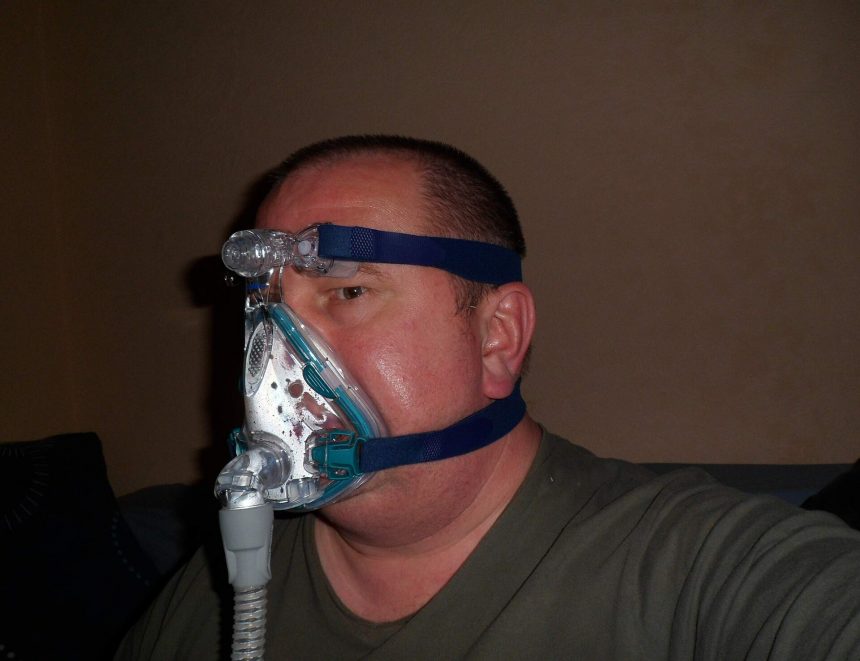
Its mechanism differs fundamentally from CPAP. Obstructive sleep apnoea occurs when the muscles holding the upper airway open relax during sleep and the airway collapses. CPAP solves this mechanically, splinting the airway open with pressurised air delivered through a mask. AD109 targets the neuromuscular control itself, aiming to keep airway muscle tone higher during sleep.
CPAP works. Its problem is that a substantial share of patients cannot tolerate wearing a mask connected to a machine every night, and abandon it. Those are the patients this drug is aimed at.
The trial
SynAIRgy (NCT05813275) was a Phase 3 randomised, double-blind, placebo-controlled trial published in the American Journal of Respiratory and Critical Care Medicine on 18 May 2026 (DOI 10.1093/ajrccm/aamag215).
- 646 adults with obstructive sleep apnoea who had failed or refused CPAP.
- 69 centres across the United States and Canada.
- 324 randomised to AD109, 322 to placebo, over 26 weeks.
- Lead investigator: Patrick J. Strollo, Jr., MD, University of Pittsburgh and the VA Pittsburgh Healthcare System.
A second Phase 3 trial, LunAIRo, running 51 weeks, reported similar topline results: a 46.8 per cent AHI reduction against 6.8 per cent for placebo.
The results, in both forms
The apnoea-hypopnoea index (AHI) counts breathing interruptions per hour of sleep. It is the standard measure, and the primary endpoint here.
As a percentage: geometric mean AHI fell 44.1 per cent on AD109 versus 17.6 per cent on placebo (P<.0001).
In absolute events per hour: AHI changed by −3.3 events per hour on the drug and +0.7 on placebo — a treatment difference of 4.0 events per hour (P=.001).
Those describe the same result. The first sounds transformative; the second sounds modest. Neither is wrong, and this is why absolute numbers belong next to relative ones in any report of a clinical trial.
Four fewer interruptions per hour matters differently depending on where you start. For someone with mild apnoea at 12 events an hour, it is a meaningful proportion. For someone at 45, it leaves them still severely affected.
Supporting measures moved in the same direction. Hypoxic burden — a measure of how much oxygen deprivation the body actually sustains, which many researchers consider more clinically relevant than event counts — fell 44.7 per cent versus 8.5 per cent (P<.0001). The oxygen desaturation index fell 3.7 events per hour against a 0.9 increase on placebo (P=.001).
What did not work
Two results went the other way, and they are the ones the FDA has focused on.
The responder analysis failed. The proportion of patients achieving at least a 50 per cent reduction in AHI was 25.8 per cent on the drug versus 19.8 per cent on placebo — P=.182, not statistically significant. This is arguably the most clinically intuitive way to ask the question: how many people got substantially better? On that measure, the trial did not distinguish AD109 from placebo.
Fatigue did not significantly improve. The PROMIS-Fatigue score changed by −7.4 points on drug versus −6.2 on placebo, P=.059 — narrowly missing significance. Fatigue is the symptom that drives most people with sleep apnoea to seek treatment in the first place. A drug that improves a measurement without improving how tired you feel has not yet demonstrated the thing patients want.
FDA reviewers have questioned “the clinical meaningfulness of certain endpoint results,” including the primary endpoint, and raised concerns about the patient-reported outcome measures used.
Side effects
Discontinuation due to adverse events was 21.2 per cent on AD109 versus 3.1 per cent on placebo — roughly seven times higher.
Reported effects include dry mouth, insomnia, nausea and urinary difficulty, consistent with the known profiles of both component drugs. Insomnia is a particularly awkward one in a treatment taken at bedtime for a sleep disorder.
One in five patients stopping because of side effects is a real constraint on how useful a drug can be in practice, and it should be read alongside the fact that these are patients who had already found CPAP intolerable.
What the researchers and company say
Strollo described the findings as “encouraging evidence that targeting neuromuscular dysfunction can translate into meaningful clinical outcomes.”
Apnimed chief executive Larry Miller, MD, called peer-reviewed publication “an important milestone in establishing a scientific foundation for AD109.”
Both are measured statements. Neither claims the drug replaces CPAP.
Who this is and is not for
The trial enrolled only patients who had failed or refused CPAP. Patients who tolerate CPAP were excluded by design.
That matters for interpreting the result. CPAP, used consistently, typically reduces AHI far more than four events per hour. This trial does not show AD109 is comparable to CPAP, and was not built to. It asks a narrower question: for people who will not or cannot use the machine, is a pill better than nothing?
On the primary endpoint, the answer was yes. On whether patients felt better, the trial did not demonstrate it.
Why untreated apnoea matters
Obstructive sleep apnoea is associated with hypertension, cardiovascular disease, type 2 diabetes, cognitive impairment and daytime sleepiness severe enough to affect driving safety. A large share of cases are undiagnosed, and among those diagnosed, adherence to CPAP is a persistent clinical problem.
That is why a pill attracts attention even with unimpressive absolute numbers: the realistic comparison for many patients is not against CPAP, but against no treatment at all.
What happens next
Apnimed’s New Drug Application was accepted by the FDA on 14 July 2026, with a PDUFA target action date of 28 February 2027. By that date the agency will approve, reject, or issue a complete response letter requesting more data.
Given that reviewers have publicly questioned the clinical meaningfulness of the primary endpoint, the outcome is genuinely uncertain, and this article takes no position on it.
What AHI measures, and what it misses
The apnoea-hypopnoea index counts events per hour of sleep — apnoeas, where breathing stops for at least ten seconds, and hypopnoeas, where it is substantially reduced with oxygen desaturation or arousal.
It is the standard endpoint because it is objective, reproducible and measurable in a sleep laboratory. It is also a count, and counts discard information.
Two patients can have identical AHI values and very different disease. One has brief events with small oxygen dips. The other has prolonged events with deep desaturations and repeated arousals. AHI treats them the same.
This is why the hypoxic burden result matters more than it might appear. Hypoxic burden integrates the depth and duration of oxygen desaturation rather than counting episodes, and a growing body of research suggests it predicts cardiovascular outcomes better than AHI does. AD109 reduced it by 44.7 per cent against 8.5 per cent on placebo — a larger separation than the headline event count, and arguably the more clinically meaningful of the two.
Reading only the primary endpoint would miss that. Reading only the percentages would miss the modest absolute change. Both are needed.
Why the fatigue endpoint is the one to watch
The PROMIS-Fatigue result — a difference of 1.2 points, P=0.059 — is the most consequential near-miss in the trial, and it is worth understanding why researchers treat it as such.
Sleep apnoea has two distinct harm profiles. The long-term one is cardiovascular and metabolic: hypertension, arrhythmia, stroke and diabetes risk accumulating over years. The immediate one is how you feel and function: exhaustion, impaired concentration, and dangerous drowsiness while driving.
Patients seek treatment overwhelmingly for the second. They tolerate CPAP, or fail to, on the basis of whether they feel better.
A treatment that improves measurements without improving symptoms may still be worth having, if the measurement improvement translates into reduced long-term risk. But that is an inference, not a demonstration, and confirming it would require following patients for years.
P=0.059 is also a reminder about statistical thresholds. The conventional 0.05 cutoff is a convention, not a natural boundary; a result at 0.059 is not meaningfully different from one at 0.049. It means the trial did not have enough evidence to distinguish the effect from chance — which may reflect a genuinely small effect, or a trial not powered to detect a real one. Those are different conclusions and this trial cannot separate them.
Why the drug’s components are already familiar
Neither ingredient is new, and that is a deliberate development strategy worth understanding.
Atomoxetine is a norepinephrine reuptake inhibitor long used for ADHD. Raising norepinephrine activity increases the drive to the muscles that keep the upper airway open during sleep.
Aroxybutynin is related to oxybutynin, an antimuscarinic used for overactive bladder. The rationale here is different: reducing muscarinic activity is thought to limit the loss of airway muscle tone that occurs particularly during REM sleep.
Combining known compounds shortens development considerably. Safety profiles are established, pharmacology is characterised, and manufacturing is understood. The trial can focus on whether the combination works for a new indication rather than establishing basic safety.
The trade-off is that the side effects are also inherited. Dry mouth and urinary difficulty are classic antimuscarinic effects. Insomnia and nausea are consistent with atomoxetine. The 21 per cent discontinuation rate is not a surprise given the components; it is the predictable cost of the approach.
The CPAP adherence problem this is aimed at
CPAP is highly effective when used. The literature on whether it is used is considerably less encouraging.
Adherence is conventionally defined as at least four hours a night on at least 70 per cent of nights — a threshold that is itself an accommodation, since apnoea occurs across the whole night. Substantial proportions of patients fail to meet even that, and a meaningful share abandon therapy in the first months.
The reasons are practical rather than medical: mask discomfort, air leaks, dryness, claustrophobia, noise, the difficulty of travelling with a machine, and the effect on a partner.
This is the gap AD109 addresses. For a patient who has tried CPAP and stopped, the realistic comparison is not drug versus CPAP. It is drug versus nothing — and against nothing, a four-event-per-hour improvement with a 45 per cent reduction in hypoxic burden is a different proposition than the same numbers would be against an effective machine.
Whether the FDA agrees that this clears the bar for approval is exactly what the February decision will answer.
This article reports clinical trial findings and is not medical advice. If you have or suspect sleep apnoea, discuss treatment with a qualified clinician. Do not stop CPAP or any prescribed treatment on the strength of a news report.
Sources
- Strollo, P.J. et al., SynAIRgy trial, American Journal of Respiratory and Critical Care Medicine, 18 May 2026 — academic.oup.com
- Apnimed, dual publication press release — apnimed.com
- ScienceDaily, “Goodbye CPAP? New sleep apnea pill cuts breathing events by 44%,” 31 August 2026 — sciencedaily.com
- Medical Daily, “Sleep Apnea Pill Faces a February Decision After Regulators Questioned Whether Its Main Result Is Meaningful,” 2026 — medicaldaily.com
- University of Pittsburgh School of Medicine, “Once-Nightly Pill Treats Sleep Apnea” — medschool.pitt.edu